“What is my value as a leader? How do I know if I’m adding value if I’m not in the day-to-day work?”
These are consistent, persistent questions I hear from the leaders and executives I coach. And one of my favorite questions to ask in response is, “Have you asked your team? Your clients and stakeholders?”
The thing is, I can already guess what the leaders will hear from the groups who depend on them and look to them for leadership. They want a LEADER. They want someone who they are proud to follow, someone they can count on to have their back, to advocate for them, someone who communicates with honesty and transparency. They want a leader with a high moral compass, strong sense of ethics, and integrity.
I know…this sounds…squishy. But I promise, it’s not. This is backed by loads of research and data. Allow me to share.
Back in my corporate days I leveraged a leadership model, and corresponding 360-degree assessment, based on the research of John Zenger and Joseph Folkman, which they turned into a fantastic book titled, “The Extraordinary Leader,” Their research is still foundational for me, as a coach of senior leaders, and continues to provide a north star and solid set of definitions around what it means to be a true leader.
Why do I like their model so much? First, because it’s based on data, research, and statistical analysis. Second, because as the authors themselves state in their three objectives for publishing a book: Simple & Understandable, Actionable, and Empirical. As of the most recent version of the book, their findings are supported by over one million feedback instruments (360-degree, multi-rater assessments) for over 120,000 leaders.
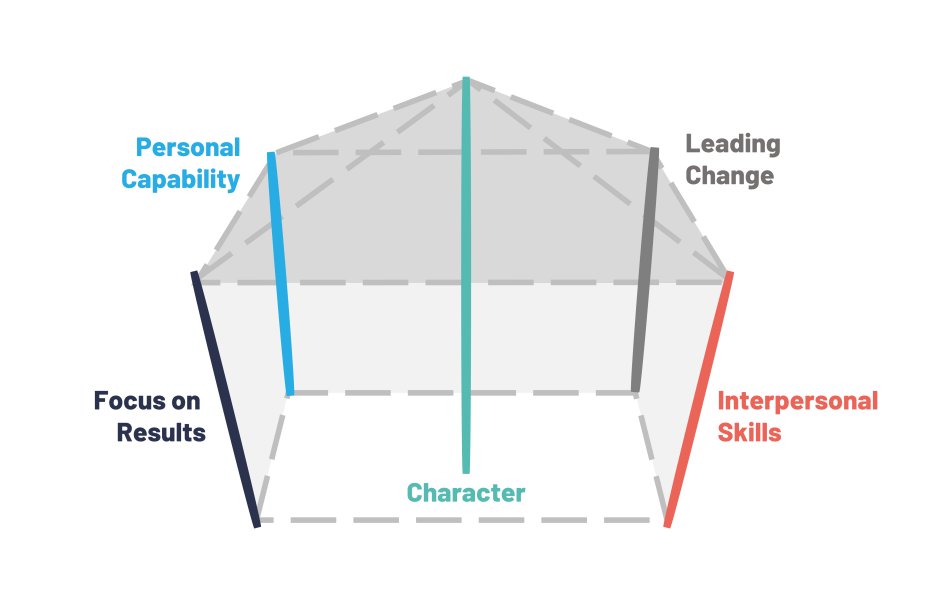
The Zenger Folkman model is best represented by the image of a tent (see the featured picture for this post). Lifting and supporting the tent are five poles – one on each of the four corners representing Focus on Results, Personal Capability, Leading Organizational Change, Interpersonal Skills – and a center pole, Character, that determines the overall strength and expanse of the tent. The larger the tent, the broader your impact as a leader.
It’s that center pole of Character that is truly the foundation of great leadership. What does that look and sound like? Here are a few thoughts:
- Not just talking the talk but walking the walk.
- Putting the business and their teams at the center of the decisions, rather than their own self interests.
- Keeping ego in check.
- Consistently keeping and following through om commitments.
- Owning decisions.
- Advocating for the team.
- Understanding their value is in empowering others.
- Offering trust to others.
The list could go on, and I’d love to hear thoughts from others about what you would add. In Zenger and Folkman’s research they found if a person scores high in the other four areas, but Character is low, they will most likely not be perceived as a “great” leader. In short, without character, long term success is nearly impossible, and failure is all but certain. (Note: There are outliers, but they represent less than 2%)
I’ll share a cautionary tale about how scoring lower on the center Character pole can wind up not only becoming a leadership derailer, but in this case almost cost the leader a role he’d been aspiring to for years. This leader had a strong reputation as a “get it done” person and was an individual who could fix any broken project. While he sat in a senior leadership role, he very much operated as a lone ranger, and was proud of that brand. Unfortunately, much of his success came at the expense of others, and he was known for getting results by leaving “bodies by the side of the road.” When I came into the picture, he was desperately trying to understand why he’d been passed over for a chief executive role. His 360 feedback painted a stark picture. He was not trusted by any of his raters – not his directs, his peers, key stakeholders, or leaders.
He had a decision to make, after he’d absorbed the 360 report. While the feedback was initially gut wrenching, he heard and felt the underlying truth within it. He chose to do the work to rebuild trust, shift his mindset, and focus deliberately on collaboration, communication, and listening. Today, I’m happy to report he is in the chief executive role he’d aspired to for the majority of his career, and has a devoted, energized team.
Given all this information, what larger questions do you want to ask yourself on a regular basis? What are your answers to:
- How do I embody character in my day-to-day leadership?
- Why would others trust me?
- What are the key leadership behaviors valued most by my own team?
- How do I inspire and motivate others?
The bottom line is this: How do you ensure your center pole is supporting your full leadership tent?
Remember this: If a leader doesn’t instill a sense of trust in the people, the teams, and the businesses around them, can they truly be regarded as a leader? Why would anyone follow a person who doesn’t lead with character? My answer? They shouldn’t.